
Click on photo to enlarge ~ Scroll for more photos
Plants-00
Plants-01
Plants-02
Plants-03
Plants-04
Plants-05
Plants-06
Plants-07
Plants 08
Plants 09
Plants-10
Plants -11
Plants-12
Plants-13
Plants-14
Plants-15
Plants-16
Plants-17
Plants-18
Plants-19
Plants-20
Plants-21
Plants-22
Plants-23
Plants-24
Plants-25
Plants-26
Plants-27
Plants-28
Plants-29
Plants-30
Plants-31
Plants-32
Plants-33
Plants-34
Plants-35
Plants-36
Plants-37
Plants-38
Plants-39
Plants-40
Plants-41
Plants-42
Plants-43
Plants-44
Plants-45
Plants-46
Plants-47
Plants-48
Plants-49
Plants-50
Plants-51
Plants-52
Plants-53
Plants-54
Plants-55
Plants-56
Plants-57
Plants-58
Plants-59
Plants-60
Plants-61
Plants-62
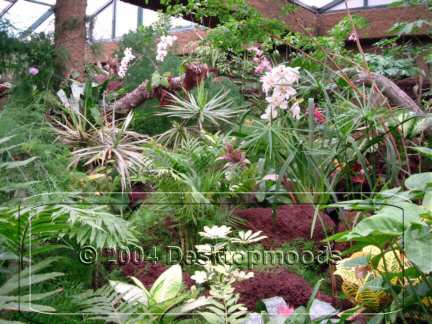
In man made arrangements as in this picture all the plants are accustomed to the same climate conditions and prefer a well-drained moist atmosphere with humus rich compost. The epiphytes (see illustration 01) are usually attached using wire or cord to tree branches with moss to cover their anchor and provide essential moisture until such time that they themselves provide their own aerial roots.
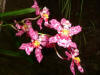
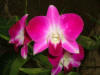
Orchids – 50 percent of which are epiphytic (living on rocks or branches of trees attaching themselves with aerial roots). The correct name for orchid is Orchidacea. They like to be kept in humid, shady conditions. There are somewhere in the region of 70,000 hybrid or cultivars worldwide and many yet undiscovered. Apart from certain polar and desert regions, orchids can be found in every corner of the earth. The orchid is also known as a symbol of love and is also commonly used for scent making.
In greenhouses orchids can be susceptible to red spider mite and various fungal diseases. Placed in the wrong position orchids can also suffer from sunburn. Most orchids like a moist humus rich soil. Approximately 50 percent of orchids are terrestrial, the rest are epiphytic, however they are not parasitic (living off their host). Despite their reputation they are remarkably tolerant plants and can often survive when neglected.
Bougainvillea - Approximately 18 species of shrubby climbing deciduous greenhouse plants, unless grown in a Mediterranean climate. The flowers are inconspicuous but are surrounded by brilliantly coloured paper-like bracts that are good for growing as a wall covering or over pergolas for decoration. They can be grown in any type of soil but prefer a full sun position. They are tender to semi-hardy and prefer dry summers. Pruning must be done in late winter (i.e. late February early March).
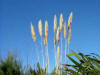
Pampas Grass - Also known as Cortaderia selloana (grown mostly as specimen plants in landscape aspects) and Cortaderia jubata, unlike selloana this plant has become a problem in many parts of the world because it is so invasive. It invades roadsides and coastal areas in warmer climates, more especially where the ground is open and it hates shady areas and full grasslands.
Cortaderia is a genus of 15 species of evergreen grasses. Their silky, silvery flowering plumes stand out against a dark background. They produce millions of seeds without pollination. The plumes are formed mostly in early or mid summer. Most plants are herbaceous and make good screening and tolerate pollution. These plumes are excellent for dried flower arrangements.
Bird of Paradise – Origin South Africa. A genus of around five species of very tender evergreen perennial plants requiring greenhouse cultivation unless grown in tropical frost free climates. The flower heads are particularly showy and are so named because of their bird-like appearance. They have long lasting orange, blue and white flowers that can flower on and off all year round and prefer a rich soil. During the winter months the soil temperature must not drop below 10°C. Light shading may be necessary in a greenhouse during hot summers to prevent the leaves from scorching. Ventilation of the greenhouse is required if a temperature exceeds 21°C. They are susceptible at times to infections of scale insects of various species and can be prone to a disease called “Physiological Disorder”.
Chrysanthemums – A member of the Anthemus tribe of daisy family. There are over 200 known species of Chrysanthemums; most are semi to moderately hardy. Best planted in late spring, they prefer a moist, well-drained, fertile soil in an open position. It is advisable to prepare support canes in advance for later growth, as nearly all varieties will need staking. Chrysanthemums can be prone to leaf minors, caterpillars and white fly. It is better to stop growth when the plants are 150 to 200mm tall to induce branching. This is very good for Korean pompon varieties that produce many small flowers. They all make excellent cut flowers.
Roses – There are too many varieties of rose to comment on the need of each one. Most are hardy deciduous plants. A well drained, well prepared fertile soil in full sun suits almost every species. The wild varieties are more disease resistant than the hybrid ones. All can be cultivated via hardwood cuttings. Roses do best if pruned in late spring or autumn, unless rose hips are needed for decorative or culinary purposes, prune these back after flowering to about 25mm above a suitable node. Probably the best way to prune the climbing varieties is to cut back each flowering branch by approximately 350mm and 25mm above a node once the flower has fallen. If green fly attacks occur, this problem can be eliminated efficiently by applying a non-expensive ant powder that must be washed off no longer than 24 hours later. An old-fashioned tip for supplying potash to newly planted roses is to place banana skins under the roots. Rose petals are also used for scent making and in pot-pourri.
Magnolia – A group of approximately 80 species of exotic looking trees and shrubs. Often grown for their distinctive flowers that are highly scented and used in perfumery and pot pouri. Most species are deciduous and very hardy. They prefer a moist, rich, lime-free soil. Cuttings can be taken from semi-ripe branches or by layering. In the UK we often know them by two main types, the tulip tree and the star shaped bush varieties. Pruning is generally unnecessary and undesirable. If placed in the right position these plants will give many years of trouble-free pleasure.
Hibiscus – There are approximately 300 species consisting of evergreen, deciduous, hardy, tender shrubs and small trees, often with soft wooded branches. Best grown in a sunny position sheltered by a wall and over wintered under glass in colder areas. They can be grown from seed or semi-ripe cuttings that should be taken from non-flowering branches. The flowers can achieve a size sometimes exceeding 150mm. Generally an average size of around 100 mm is achieved on European grown varieties although on many occasions even these can be much larger. To obtain seeds from these bushes it is often best to have more than one bush, pollination is best achieved using a small paint brush as European bees do not do a very good job of this. Also using this method it is possible to achieve different varieties through artificial pollination.
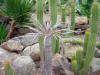
Cactus – Succulent plants with stout stems or bodies, adapted to withstand heat or drought. Contrary to popular opinion, cacti flower regularly, and often produce large flowers looking over-sized for the plant. The flowers have no stalks. All cacti prefer extremely free draining soil and at least 4-6 hours direct sun daily. It is important not to over pot cacti as their root mass is very small and they do not like to be disturbed. To promote flowering it is advisable to use a high potash feed. If taking cuttings always let the wound dry for several hours before placing it in its rooting position. Seeds are best sown in the springtime and very often cactus can be expanded in number from offshoots.
Forest Cactus – Four of the most commonly grown species of this group include the Christmas Cactus as in illustration 10 (because its peak flowing period is in December). Easter Cactus which flowers at Easter. Epicacti (the Orchid Cacti) that flowers mainly in the spring and summer and is scented. Lastly the Rat-tail Cactus that has cylindrical green stems and is best grown as a hanging plant. Being epiphytes these plants grow comfortably on rocks or tree branches in their wild state. In cooler climates they are also grown in pots under glass and prefer a humus rich, lime free, well-drained potting mixture, which must be kept moist and in semi-shade at all times. Cuttings are easily taken from non-flowering newly matured leaves, these are best left to dry before placing in their rooting positions. The plant itself can be grown outside in a European climate during the summer months in hanging baskets.
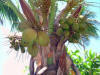
Cocos nucifera (Coconut palm) –The gently curved trunks (rarely growing vertically straight) make a beautiful tree to add a tropical affect to any landscape setting. Prefers to be grown in full sun, will tolerate clay; loam; sand; acidic; alkaline and well-drained soils. Will also tolerate a salty atmosphere, is semi-hardy and will grow in temperatures down to –6°C, but not for long periods. Coconut palms can be grown successfully in areas with poor drainage, compacted soil and where air pollution and drought are common. They often grow to 15-20m high with a spread of 3-8m. The most popular species grown today is the Golden Malayan Dwarf. The reason for this is many other species are being attacked with a devastating lethal yellowing disease. The Malayan palms are similar to the Jamaican Tall palms that have straight trunks. The coconut is not a nut but a fruit that is edible. They respond well to being fertilized regularly but can be infested with Nematodes.
Iris – A genius of 300 monocotyledonous plants found throughout the Northern Hemisphere, none grow wild in the Southern Hemisphere. Their habitat extends from the Arctic Circle to the Tropic of Cancer, with a large proportion grown in Great Britain. Irises fall into four main categories. Bearded (Pogoniris), flowers have hairy beards on the falls, roots are rhizomatous, leaves are flat and sword-like. Beardless (Apogon), the flowers are beardless, falls are smooth, roots are rhizomatous and they have flat slender leaves. Crested (Evansia), the flowers have fleshy crests on the falls instead of beards. They have slender rhizomes on or just below the soil surface. The leaves are flat, broad and glossy. Bulbous, a bulbous rootstock, with fat storage roots attached to the base. The leaves are channelled into cross-section and the flowers are produced in the leaf axils. The typical iris flower is arranged in multiples of three. The all prefer full sun and an abundance of water.
Thistle – These plants are members of the Aster family, however, unlike Asters almost the entire plant of Thistles is covered in very sharp spiny bristles that can easily penetrate the toughest of materials. Despite this defence some species of deer have been observed munching on the leaves. The Ancient Greeks used the Bull Thistle (Cirsium Vulgire) for the treatment of swollen veins. At the peak of the blooming cycle the Thistle is a magnificent site. Since it is a composite plant each of the projections on the bulkhead is an individual flower, which means you are looking at not one flower but hundreds. It is possible to see subtle differences in the bulkheads of the same plant, this is because the Thistle is prone to hybridisation (pollen from a different species pollinates a plant resulting in seeds having characteristics of both species).
Chrysanthemums – A member of the Anthemus tribe of daisy family. There are over 200 known species of Chrysanthemums, most are semi to moderately hardy. Best planted in late spring, they prefer a moist, well-drained, fertile soil in an open position. It is advisable to prepare support canes in advance for later growth as nearly all varieties will need staking. Chrysanthemums can be prone to leaf minors, caterpillars and white fly. It is better to stop growth when the plants are 150 to 200mm tall to induce branching. This is very good for Korean pompon varieties that produce many small flowers. They all make excellent cut flowers.
Primula/Polyanthus – (sometimes called primrose) a genius of around 500 species of deciduous, winter green, hardy and half-hardy perennials. They grow widely in the Northern Hemisphere and in mountainous regions in the Southern Hemisphere. These plants are grown mainly in cool greenhouses, rock gardens, herbaceous borders and decorative waterside planting. They are also widely used for spring bedding. Most plants are very hardy and will grow in virtually any soil, however, they do prefer a rich soil, preferably in partial shade. One exception to this rule is the polyanthus that is often termed the bog primula because of its love of water. The flowers, which come in many different colours and are showy and rosette/clump forming are produced in spring and early summer with umbels of five petals.
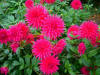
Dahlias – Consisting of around 20 species of half-hardy tuberous perennials, divided into two groups. Border dahlias are named cultivars propagated by cuttings. Most are tall and double flowering. The other variety is bedding cultivars that are single or double flowered, grown from seed and are always dwarf. Preferring a rich, well drained but moist soil in a sunny position they do well planted approximately 150mm deep and 1m apart. As the season develops, border dahlias will need supporting so it would be advisable to prepare your support canes in advance. Lift the tubers at the onslaught of autumn and after the first frost has blackened the leaves. Allow the tubers to dry first, then place them in cool damp peat in a frost-free position for the winter. Dividing tubers should be done before planting out at the return of spring ensuring that each tuber has at least one strong eye developing. The flowers are prone to earwigs that tend to come out of their hiding places once brought indoors.
Hibiscus – There are approximately 300 species consisting of evergreen, deciduous, hardy, tender shrubs and small trees, often with soft wooded branches. Best grown in a sunny position sheltered by a wall and over wintered under glass in colder areas. They can be grown from seed or semi-ripe cuttings that should be taken from non-flowering branches. The flowers can achieve a size sometimes exceeding 150mm. Generally an average size of around 100 mm is achieved on European grown varieties although on many occasions even these can be much larger. To obtain seeds from these bushes it is often best to have more than one bush, pollination is best achieved using a small paint brush as European bees do not do a very good job of this. Also using this method it is possible to achieve different varieties through artificial pollination.
Pampas Grass – Also known as Cortaderia selloana (grown mostly as specimen plants in landscape aspects) and Cortaderia jubata unlike selloana this plant has become a problem in many parts of the world because it is so invasive. It invades roadsides and coastal areas in warmer climates, more especially where the ground is open and it hates shady areas and full grasslands. Cortaderia is a genus of 15 species of evergreen grasses. Their silky, silvery flowering plumes stand out against a dark background. They produce millions of seeds without pollination. The plumes are formed mostly in early or mid summer. Most plants are herbaceous and make good screening and tolerate pollution.
Cyclamen – A genus of around 15 species of tuberous plants that are found wild in Mediterranean countries. Most species of cyclamen are hardy and carpet forming. They are best planted under the shelter of trees and large shrubs or woodland areas. They prefer moist but well drained peaty or leafy soil, in full or partial shade. If in doubt of which side up to plant the tubers (smooth domed side downwards) then plant the tubers on their sides at a depth of around 50mm. The plants have heart-shaped leaves and are often marbled. The flowers have a characteristic nodding appearance with five backswept petals in shades of violet, crimson, pink and white.
Chrysanthemums – A member of the Anthemus tribe of daisy family. There are over 200 known species of Chrysanthemums; most are semi to moderately hardy. Best planted in late spring, they prefer a moist, well-drained, fertile soil in an open position. It is advisable to prepare support canes in advance for later growth as nearly all varieties will need staking. Chrysanthemums can be prone to leaf minors, caterpillars and white fly. It is better to stop growth when the plants are 150 to 200mm tall to induce branching. This is very good for Korean pompon varieties that produce many small flowers. They all make excellent cut flowers.
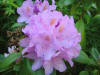
Rhododendron – A genus of at least 500 species and around 10,000 cultivated sub-species. Almost all plants are evergreen and need a position sheltered from cold winds and if possible early morning sun, especially for varieties flowering before the end of May to avoid damage to flower buds and young growth caused by sudden thawing after frost. Excellent for semi-shade to shaded positions in a chalky and lime-free soil. The ideal soil should be a well-drained sandy loam with leaf-mould to improve the soil conditions. It has also been discovered that the leaves of Rhododendrons can be toxic to other plants. They rather cleverly do this to clear the ground to spread their own roots. It must be also noted that they can be very invasive and will tolerate sub-zero temperatures.
Orchids – 50 percent of which are epiphytic (living on rocks or branches of trees attaching themselves with aerial roots). The correct name for orchid is Orchidacea. They like to be kept in humid, shady conditions. There are somewhere in the region of 70,000 hybrid or cultivars worldwide and many yet undiscovered. Apart from certain polar and desert regions, orchids can be found in every corner of the earth. The orchid is also known as a symbol of love and is also commonly used for scent making.
In greenhouses orchids can be susceptible to red spider mite and various fungal diseases. Placed in the wrong position orchids can also suffer from sunburn. Most orchids like a moist humus rich soil. Approximately 50 percent of orchids are terrestrial, the rest are epiphytic, however they are not parasitic (living off their host). Despite their reputation they are remarkably tolerant plants and can often survive when neglected.
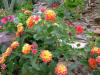
Lantana – A genus of around 150 species, only two of which are in general cultivation, evergreen shrubs grown mostly in warmer climates as hedging or ground cover. They grow well in any well-drained soil in full sun. The seeds for these plants are formed in a black berry. Tender to semi-hardy and fast growing with aromatic leaves that are pungent when crushed. They have showy flowers that change in colour from yellow through (in multiple stages) to orange and red and likewise with the mauve variety. These plants are a must for any growing enthusiast just to watch the colour changes from bud to full bloom and to smell the aroma that fills the air as you brush past the leaves. In their native environment it is also a pleasure to watch the many species of butterfly that visit and feed off these plants.
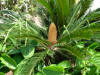
Sago Palm – (Cycas revolute) also known as the King Sago Palm and often called living fossils, the origin of these plants can be dated back 200 million years to the early Mesozoic era and are related to the conifer and Ginko tree. Although mainly grown in tropical climates this plant has been proven to survive winters down to as low as -10°C. They are very slow growing and have male and female varieties. The male variety produces a large cone-shaped flower as pictured. The female variety has a more open feathery shaped flower. The flowers are usually borne in the spring and seeds develop through the summer / early winter months, ready to be removed and soaked to prepare for planting in January to February the following year. Please note that the seeds are toxic. If planted in a well-drained soil with their own space around them to allow for their large approximately 2m leaf span they will thrive with or without attention for many years.
Dahlias – Consisting of around 20 species of half-hardy tuberous perennials, divided into two groups. Border dahlias are named cultivars propagated by cuttings. Most are tall and double flowering. The other variety is bedding cultivars that are single or double flowered, grown from seed and are always dwarf. Preferring a rich, well drained but moist soil in a sunny position they do well planted approximately 150mm deep and 1m apart. As the season develops, border dahlias will need supporting so it is advisable to prepare your support canes in advance. Lift the tubers in the autumn, after the first frost has blackened the leaves. Allow the tubers to dry first, then place them in cool damp peat in a frost-free position for the winter. Dividing tubers should be done before planting out in the spring, ensuring each tuber has at least one strong eye developing. The flowers are prone to earwigs that tend to come out of their hiding places once brought indoors.
Knapweed (more commonly known as Cornflower) – The specimen in the picture (Centaurea Montana) is a perennial used in cottage garden arrangements. This particular species is found in the Pyrenees, Alps and Carpathians and grows to a height of 45-60cm. Cornflower is a genus of 600 species of annual, biennial and perennial herbaceous plants. Many species of this genus have attractive silvery foliage and can be grown in very poor soil conditions preferably in full sun. They do not need fertilising and propagation is by seed or division.
Roses – There are too many varieties of rose to comment on the need of each one. Most are hardy deciduous plants. A well drained, well prepared fertile soil in full sun suits almost every species. The wild varieties are more disease resistant than the hybrid ones. All can be cultivated via hardwood cuttings. Roses do best if pruned in late spring or autumn, unless rose hips are needed for decorative or culinary purposes, prune these back after flowering to about 25mm above a suitable node. Probably the best way to prune the climbing varieties is to cut back each flowering branch by approximately 350mm and 25mm above a node once the flower has fallen. If green fly attacks occur, this problem can be eliminated efficiently by applying a non-expensive ant powder that must be washed off no longer than 24 hours later. An old-fashioned tip for supplying potash to newly planted roses is to place banana skins under the roots. Rose petals are also used for scent making and in pot-pourri.
Tulips – Tulip bulbs are very hardy and are round or ovoid in shape. They prefer a rich well-drained soil in a sunny position. Good for rockeries but used mainly for spring bedding and containers, of which the taller varieties make excellent cut flowers. With a genus of approximately 100 species tulips came to Europe from Turkey in the sixteenth century over 300 years ago. Most new varieties of tulips raised today are from seeds and were classified into 23 divisions by the Royal General Dutch Bulb Growers’ Society and the Royal Horticultural Society. However, in the light of recent study this has been reduced to 15 divisions. Division 9, the Rembrandt Division even contains a species called Union Jack that is ivory white, flamed raspberry red with a blue-edged white base.
Broom – (Cytisus) A genus of 25-30 species of mainly deciduous shrubs that can attain a height of up to 10ft. The species in the picture is called Lord Lambourne (Cytisus scoparius). Brooms in general are sun-loving shrubs with green stems grown for their graceful form and profusion of flowers. They are native to Europe, Asia Minor and North Africa. The seeds have hard coats enabling them to survive in the environment for up to 80 years. A few species of Broom are tender and require greenhouse cultivation, although most are very hardy and best in light but not fertile soil. In many species the leaves are only present on the branches for a few months of the year. They do not transplant well so it is best if pot grown to plant them into their flowering positions in September and October at the onset of winter or March and April at the onset of summer to enable them to get established.
Euonymous – A genus of 176 species of deciduous and evergreen trees and shrubs. These trees and shrubs are easily grown in ordinary garden soil and in sun or partial shade. The evergreen species tolerate a considerable amount of shade but require a sheltered position. Variegated forms (as in the specimen in the picture, known as Silver Queen) are usually less hardy and are best grown against a south-facing wall. The flowers of these plants are very small and insignificant and the seeds are surrounded in a black fleshy berry. Although the evergreen varieties can be planted at any time of the year, September or October is preferable. The deciduous varieties should be planted out between October to March in their dormant period. Euonymous are susceptible to infestations of scale insects that make the plants appear sticky and sooty. For this very reason they will also appear to be infested with ladybirds that thrive on the greenfly and scale insects.
Aquilegia – Also known as Columbine. A genus of 100 species of hardy, herbaceous perennials. Suitable for rock gardens and borders alike, although not always easy to grow they resemble the maidenhair fern in appearance. The distinctive flowers are funnel-shaped with a prominent spur to each of the five petals. Aquilegia are fairly short lived but produce an abundance of seeds. The specimen in the picture is Mrs Scott-Elliott’s strain. Through cross pollination aquilegia can attain many different colour combinations, however, if left to natural pollination the seeds will often produce flowers of either pale pink or mauve in colour. They should be planted outdoors between September and March in a moist, but well-drained, leafy soil in a sunny or partially shaded position.
Lonicera – Also known as Honeysuckle. A genus of 200 species of deciduous and evergreen shrubs and woody climbers with whorles of trumpet-shaped, often sweetly fragrant flowers. The evergreen varieties are not usually fragrant. All produce fleshy berries that are eaten by birds usually in the winter months. However these berries are toxic to humans and should be avoided. The best control of growth for these vigorous plants is to cut back branches after flowering. They can grow in any ordinary well-drained soil enriched with humus in the case of climbing varieties. All varieties will grow in sun or partial shade but the climbers do better in light shade. Their worst pests are aphids but can be very attractive to wasps to build their nests in.
Dahlias – Consisting of around 20 species of half-hardy tuberous perennials, divided into two groups. Border dahlias are named cultivars propagated by cuttings. Most are tall and double flowering. The other variety is bedding cultivars that are single or double flowered, grown from seed and are always dwarf. Preferring a rich, well drained but moist soil in a sunny position they do well planted approximately 150mm deep and 1m apart. As the season develops, border dahlias will need supporting so it is advisable to prepare your support canes in advance. Lift the tubers in the autumn, after the first frost has blackened the leaves. Allow the tubers to dry first, then place them in cool damp peat in a frost-free position for the winter. Dividing tubers should be done before planting out in the spring, ensuring each tuber has at least one strong eye developing. The flowers are prone to earwigs that tend to come out of their hiding places once brought indoors.
Rock plants – There are many types of plants that can be used for rock gardens. The soil type must be well-drained and preferably contain shingle or gravel. There are various aspects for growing rockery plants ranging from shade to full sun. The most popular rock garden plants used are Arabis, Aubrietia (as in the picture) Sedum, Genista, Saxifraga and Viola to name but a few.
Orchids – 50 percent of which are epiphytic (living on rocks or branches of trees attaching themselves with aerial roots). The correct name for orchid is Orchidacea. They like to be kept in humid, shady conditions. There are somewhere in the region of 70,000 hybrid or cultivars worldwide and many yet undiscovered. Apart from certain polar and desert regions, orchids can be found in every corner of the earth. The orchid is also known as a symbol of love and is also commonly used for scent making.
In greenhouses orchids can be susceptible to red spider mite and various fungal diseases. Placed in the wrong position orchids can also suffer from sunburn. Most orchids like a moist humus rich soil. Approximately 50 percent of orchids are terrestrial, the rest are epiphytic, however they are not parasitic (living off their host). Despite their reputation they are remarkably tolerant plants and can often survive when neglected.
Rhododendron – A genus of at least 500 species and around 10,000 cultivated sub-species. Almost all plants are evergreen and need a position sheltered from cold winds and if possible early morning sun, especially for varieties flowering before the end of May to avoid damage to flower buds and young growth caused by sudden thawing after frost. Excellent for semi-shade to shaded positions in a chalky and lime-free soil. The ideal soil should be a well-drained sandy loam with leaf-mould to improve the soil conditions. It has also been discovered that the leaves of Rhododendrons can be toxic to other plants. They rather cleverly do this to clear the ground to spread their own roots. It must be also noted that they can be very invasive and will tolerate sub-zero temperatures.
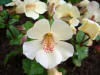
Mimulus – Also known as Monkey flower. A genus of 100 species of hardy annuals and herbaceous perennials. They grow in bog conditions in their natural environment, although do well in ordinary moist garden soil. They are generally short lived and are named monkey flower because of their apparent likeness to a monkey’s face. The flowers also have a snap-dragon appearance that is open mouthed and often spotted or blotched. They come in a multitude of different shades and colours and have a flowering period from June to September. The plants should be treated as annuals or biennials and should not be expected to flower from the same plants the following year.
Paeonies – A genus of 33 species of hardy herbaceous and shrubby perennials. The shrubby species are best grown in a position shaded from early-morning sun following a night frost. The specimen in the picture is Paeonia officinalis ‘Rubra-plena’. Paeonies are best grown in a rich well-drained soil in full sun (or partial shade when the summers are hot). Plant the crowns just below the surface at about 50mm in depth. In hot dry summers water well and mulch or top dress if left in over winter. The seedpods of many species open wide in autumn, revealing glossy blue-black seeds that can then be planted.
Orchids – 50 percent of which are epiphytic (living on rocks or branches of trees attaching themselves with aerial roots). The correct name for orchid is Orchidacea. They like to be kept in humid, shady conditions. There are somewhere in the region of 70,000 hybrid or cultivars worldwide and many yet undiscovered. Apart from certain polar and desert regions, orchids can be found in every corner of the earth. The orchid is also known as a symbol of love and is also commonly used for scent making.
In greenhouses orchids can be susceptible to red spider mite and various fungal diseases. Placed in the wrong position orchids can also suffer from sunburn. Most orchids like a moist humus rich soil. Approximately 50 percent of orchids are terrestrial, the rest are epiphytic, however they are not parasitic (living off their host). Despite their reputation they are remarkably tolerant plants and can often survive when neglected.
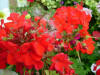
Pelargonium – Not to be confused with the genus Geranium that are hardy herbaceous perennials. Pelargoniums consist of two main categories, Zonal (this illustration Ref no 40) and Regal (illustration Ref no 44). The Pelargonium is a genus of 400 species of mainly tender semi-succulent stemmed plants, except in hot climates where the stems are woody. Generally these plants do well in any ordinary well-drained garden soil in full sun. Being tender it is advisable not to plant into the open garden until the danger of frost has passed. This picture shows the plant in three stages of its cycle. In full flower, then the green spiky looking seed stems before maturity. Also the third stage where you will notice the feathery appearance of the flight carrier which carries the actual seeds. The seeds should be planted in February in a temperature between 16-18°C. If a longer flowering period is preferred cut off the seed heads before they mature.
Iris – A genius of 300 monocotyledonous plants found throughout the Northern Hemisphere, none grow wild in the Southern Hemisphere. Their habitat extends from the Arctic Circle to the Tropic of Cancer, with a large proportion grown in Great Britain. Irises fall into four main categories. Bearded (Pogoniris), flowers have hairy beards on the falls, roots are rhizomatous, leaves are flat and sword-like. Beardless (Apogon), the flowers are beardless, falls are smooth, roots are rhizomatous and they have flat slender leaves. Crested (Evansia), the flowers have fleshy crests on the falls instead of beards. They have slender rhizomes on or just below the soil surface. The leaves are flat, broad and glossy. Bulbous, a bulbous rootstock, with fat storage roots attached to the base. The leaves are channelled into cross-section and the flowers are produced in the leaf axils. The typical iris flower is arranged in multiples of three. The all prefer full sun and an abundance of water.
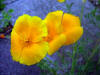
Papaver – Also known as Poppy. A genus of 100 species of annual and perennial herbaceous border plants that is also good for the rock garden enthusiast. There are two distinctive groups. Meconopsis that are beautiful but short lived moderately to very hardy perennials, for humus rich moist soil in cool shade. They are also monocarpic (die after flowering) and are best raised from seed every one to two years, which should be distributed during October. The second group being the true poppy Papaver well known for their brilliant though again short lived flowers with prominent stamens on long stems that do better in full sun and hot dry conditions. The Papaver species make good cut flowers if picked in bud and the cut end sealed by dipping into hot water. The white yellow sap from these cut flowers may be poisonous so contact should be avoided.
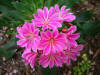
Lewisia – A genus of 20 species of herbaceous and evergreen semi-succulent perennials. The illustration shows Lewisia Cotyledon Beckneri. These plants are mainly suitable for rock gardens and Alpine houses. Best planted outdoors in March or April in a rich, lime-free, well-drained soil in a sunny position containing plenty of gravel. The necks of these plants can be susceptible to winter rot and therefore it is advisable to bank up the plant with a thick layer of chippings to create additional drainage. The best drainage for these plants is to plant them in a rock crevice or on a sloping scree. If growing from seed then seeds must be sown in March. Seedlings must be pricked out when large enough to handle and potted up into 3 inch pots. Overwinter the seedlings in a cold frame and plant out the following April into their flowering positions.
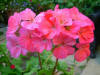
Pelargonium – Not to be confused with the genus Geranium that are hardy herbaceous perennials. Pelargoniums consist of two main categories, Regal (this illustration Ref no 44) and Zonal (illustrations Ref nos 40 & 58). The Pelargonium is a genus of 400 species of mainly tender semi-succulent stemmed plants, except in hot climates where the stems are woody. Generally these plants do well in any ordinary well-drained garden soil in full sun. Being tender it is advisable not to plant into the open garden until the danger of frost has passed. There are three stages of its cycle. In full flower, then the green spiky looking seed stems before maturity and the third stage where you will notice the feathery appearance of the flight carrier which carries the actual seeds. The seeds should be planted in February in a temperature between 16-18°C. If a longer flowering period is preferred cut off the seed heads before they mature.
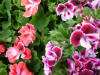
Violas, Violettas, Violets and Pansies – A genus of 500 species of annual and perennial plants that are very to ultra hardy and will suit any moist but well-drained fertile soil in cool semi-shade or full sun where the temperatures are not too hot. They are suitable for borders, path edgings, rock gardens and under planting of trees and shrubs. The leaves are ovate or heart shaped and toothed. The flowers are five-petalled with profusion in spring and early summer. To prolong the flowering period of these plants it is best to dead head after flowering to stop the seed heads forming. The plants are also susceptible to red spider mite and are loved by members of the slug and snail family. Pansies have larger flowers than violas but all are susceptible to an infection of cucumber mosaic virus. This infection can be noticed by the leaves curling at the edges and they are sometimes yellow mottled. The flowers will be small and show white streaks. This infection is often incurable.
No information available
Roses – There are too many varieties of rose to comment on the need of each one. Most are hardy deciduous plants. A well drained, well prepared fertile soil in full sun suits almost every species. The wild varieties are more disease resistant than the hybrid ones. All can be cultivated via hardwood cuttings. Roses do best if pruned in late spring or autumn, unless rose hips are needed for decorative or culinary purposes, prune these back after flowering to about 25mm above a suitable node. Probably the best way to prune the climbing varieties is to cut back each flowering branch by approximately 350mm and 25mm above a node once the flower has fallen. If green fly attacks occur, this problem can be eliminated efficiently by applying a non-expensive ant powder that must be washed off no longer than 24 hours later. An old-fashioned tip for supplying potash to newly planted roses is to place banana skins under the roots. Rose petals are also used for scent making and in pot-pourri.
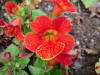
Mimulus – Also known as Monkey flower. A genus of 100 species of hardy annuals and herbaceous perennials. They grow in bog conditions in their natural environment, although do well in ordinary moist garden soil. They are generally short lived and are named monkey flower because of their apparent likeness to a monkey’s face. The flowers also have a snap-dragon appearance that is open mouthed and often spotted or blotched. They come in a multitude of different shades and colours and have a flowering period from June to September. The plants should be treated as annuals or biennials and should not be expected to flower from the same plants the following year.
Verbena – Also known as Vervains. A genus of 250 species of annual and perennial herbaceous plants. Generally used for summer bedding and hanging baskets, they bear primrose-like fragrant flowers that are arranged in dense clusters. Showy, colourful, sun loving and drought resistant but often short-lived. Usually best grown as annuals and suitable for any well-drained soil. To prolong the flowering period of these plants it is better to remove the dead heads, also to promote bushy growth pinch out the leading shoots of young plants. Sow the seeds under glass in January to March just covering them with compost and keeping them at a temperature between 18-21°C. Germination usually takes three to four weeks and the plants must be hardened off in a cold frame before planting out in May.
Dianthus – Also known as Carnations and Pinks. A genus of 300 species of annuals and evergreen perennials. There is a wide variety of use for these beautiful, fragrant and charming plants, because of the different varieties in size ranging from the small Dianthus and Pinks to the large Carnations. The flowers are usually rounded, single or double and often frilled. They do well in any well-drained, neutral or alkaline but not fertile soil in full sun or partial shade in hot climates. They tolerate pollution and coastal sites but dislike very hot dry summers and cold wet winters. They also make excellent cut flowers. In severe winters it is advisable to cover the plants with conifer branches to protect from frost. During their flowering period it is better to dead head the plants to promote a longer flowering period. If these plants are grown in a poorly drained soil they can become prone to wilt and root rot.
Bellis – A genus of 15 species of hardy perennials, often grown as biennials. The cultivated varieties have been botanically divided into 12 tribes. Usually grown in gardens for edging borders and carpet bedding and to suit window box arrangements. It is a member of the Aster family and originates from the common European or English daisy. All varieties of this plant have been produced from the common lawn weed. One generally warning to be given here is that once planted in the garden the seeds can be spread to your lawn via the wind and will grow in the way that any common daisy would grow.
Impatiens – Also known as Bizzy Lizzy. A genus of about 700 species of hardy, half-hardy and tender annuals and evergreen shrubs. One of the easiest plants to grow for the new gardener. They have succulent stems with spurred flowers and include some of the best bedding plants for shady gardens. They like a moist fertile soil. The tender species of this plant requires green house cultivation and are also popular as houseplants. This species is the easiest to cultivate by cuttings often by just standing the cut stem in water until it roots. Alternatively a very wet but well-drained soil can produce the same results. The plants grown for bedding are hybrids and come in a variety of colours to include red, white, crimson and mauve.
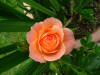
Roses – There are too many varieties of rose to comment on the need of each one. Most are hardy deciduous plants. A well drained, well prepared fertile soil in full sun suits almost every species. The wild varieties are more disease resistant than the hybrid ones. All can be cultivated via hardwood cuttings. Roses do best if pruned in late spring or autumn, unless rose hips are needed for decorative or culinary purposes, prune these back after flowering to about 25mm above a suitable node. Probably the best way to prune the climbing varieties is to cut back each flowering branch by approximately 350mm and 25mm above a node once the flower has fallen. If green fly attacks occur, this problem can be eliminated efficiently by applying a non-expensive ant powder that must be washed off no longer than 24 hours later. An old-fashioned tip for supplying potash to newly planted roses is to place banana skins under the roots. Rose petals are also used for scent making and in pot-pourri.
Knapweed (more commonly known as Cornflower) – A perennial used in cottage garden arrangements. This particular species is found in the Pyrenees, Alps and Carpathians and grows to a height of 45-60cm. Cornflower is a genus of 600 species of annual, biennial and perennial herbaceous plants. Many species of this genus have attractive silvery foliage and can be grown in very poor soil conditions preferably in full sun. They do not need fertilising and propagation is by seed or division.
Water lily – Nymphaea A genus of around 50 species of hardy and tender perennial water plants. Only a few are cultivated. Water Lilies are useful in any pond arrangement. They have elegant, solitary, many-petalled and sweetly scented, waxy flowers. The large floating leaves provide shade for fish and help to inhibit the growth of algae. The floating leaves are rounded to heart shaped and although usually green on the topside are often purplish beneath. Apart from the occasional sachet of fertilizer tucked neatly beneath the plant roots these plants require very little attention, however, it is always best to look for dying foliage and flower heads and remove them. The plants are usually rhizomes but occasionally form from tubers and are best planted in perforated plastic containers of stiff loam topped with gravel in full sun. These plants are also prone to aphids.
Violas, Violettas, Violets and Pansies – A genus of 500 species of annual and perennial plants that are very to ultra hardy and will suit any moist but well-drained fertile soil in cool semi-shade or full sun where the temperatures are not too hot. They are suitable for borders, path edgings, rock gardens and under planting of trees and shrubs. The leaves are ovate or heart shaped and toothed. The flowers are five-petalled with a profusion in spring and early summer. To prolong the flowering period of these plants it is best to dead head after flowering to stop the seed heads forming. The plants are also susceptible to red spider mite and are loved by members of the slug and snail family. Pansies have larger flowers than violas but all are susceptible to an infection of cucumber mosaic virus. This infection can be noticed by the leaves curling at the edges and they are sometimes yellow mottled. The flowers will be small and show white streaks. This infection is often incurable.
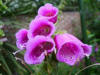
Digitalis – Also known as Foxglove. A genus of about 30 species of hardy, biennial and perennial plants often found in woodlands and along roadsides growing wild. This plant is a relative of the snapdragon family and is best treated as biennials since they tend to deteriorate after the second year from seeds. Many dislike hot summers and do best planted in a semi-shade position. These plants need no care and if left to their own devices will happily spread their seeds and produce new plants that will continue the cycle for many years.
Pelargonium – Not to be confused with the genus Geraniums that are hardy herbaceous perennials. Pelargoniums consist of two main categories, Zonal (this illustration Ref no 58) and Regal (illustration Ref no 44). The Pelargonium is a genus of 400 species of mainly tender semi-succulent stemmed plants, except in hot climates where the stems are woody. Generally these plants do well in any ordinary well-drained garden soil in full sun. Being tender it is advisable not to plant into the open garden until the danger of frost has passed. There are three stages of its cycle. In full flower, then the green spiky looking seed stems before maturity and the third stage where you will notice the feathery appearance of the flight carrier which carries the actual seeds. The seeds should be planted in February in a temperature between 16-18°C. If a longer flowering period is preferred cut off the seed heads before they mature.
Gardenia – A genus of 250 species of tender evergreen or semi-evergreen flowering shrubs or more rarely small trees. The illustration is of Gardenia Jasminoids “Florida”. Only one species is in general cultivation and this requires greenhouse treatment. The flowers are borne singularly and are approximately 3 inches across, waxy in appearance and are heavily scented. Generally grown in a rich peaty rather acid soil in partial shade. Because of their tenderness it is advisable in winter to attain a temperature of no lower than 12°C. During the summer flowering months between May to October these plants benefit from a liquid manure at 10-14 day intervals. Established plants may be placed in a sunny position outdoors from late June to no later than mid-September.
Hebe – A genus of around 100 species of evergreen flowering shrubs was formerly included in the genus Veronica. They are Mainly from New Zealand and usually with leathery leaves. These plants are moderately hardy. They prefer a well-drained soil in a sunny position. They need very little attention but it is always advisable to cut back the branches after flowering, this will keep the plant to a bushy manageable size. Honey fungus may sometimes cause the rapid death of these plants however they are generally trouble free.
Roses – There are too many varieties of rose to comment on the need of each one. Most are hardy deciduous plants. A well drained, well prepared fertile soil in full sun suits almost every species. The wild varieties are more disease resistant than the hybrid ones. All can be cultivated via hardwood cuttings. Roses do best if pruned in late spring or autumn, unless rose hips are needed for decorative or culinary purposes, prune these back after flowering to about 25mm above a suitable node. Probably the best way to prune the climbing varieties is to cut back each flowering branch by approximately 350mm and 25mm above a node once the flower has fallen. If green fly attacks occur, this problem can be eliminated efficiently by applying a non-expensive ant powder that must be washed off no longer than 24 hours later. An old-fashioned tip for supplying potash to newly planted roses is to place banana skins under the roots. Rose petals are also used for scent making and in pot-pourri.
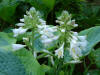
Hostas – Belonging to the Lily family of which there are around 20 or more species. They are grown mainly for their attractive foliage and trumpet like flowers that are white to purple in colour. Hostas are an excellent ground cover suitable for shady borders, in woodland and for waterside planting. Once established they can be left undisturbed for many years, although as they get larger it would be advisable to divide the clumps in spring as the new shoots appear. Most Hostas are of Japanese origin and they love a moist or boggy type soil. One advantage to growing Hostas is that they do not seem susceptible to greenfly, however, they are a gourmet meal for the slug and snail family. These plants would flourish better on a diet of fish, blood and bone meal, fed at regular intervals during the growing months.



























 .
.

|
Plants-00
In man made arrangements as in this picture all the plants are accustomed to the same climate conditions and prefer a well-drained moist atmosphere with humus rich compost. The epiphytes (see illustration 01) are usually attached using wire or cord to tree branches with moss to cover their anchor and provide essential moisture until such time that they themselves provide their own aerial roots.
|
|
|
|